
Introduction
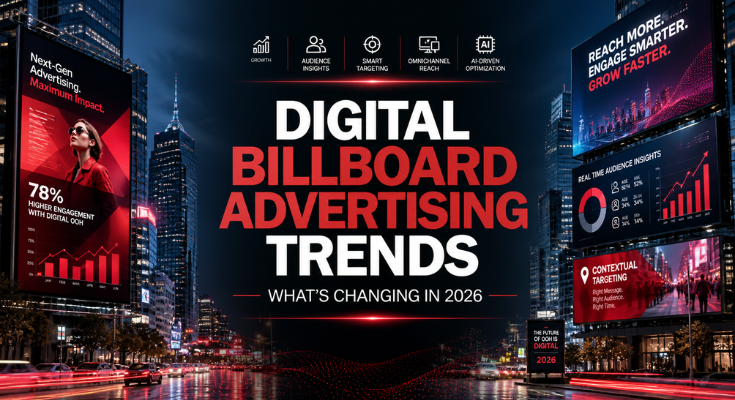
The world of outdoor advertising is moving faster than ever. If you are still thinking about digital billboard advertising the same way you did three years ago, you are already behind. In 2026, digital out-of-home (DOOH) is not just about a bright screen on a busy road — it is about data, dynamic content, real-time targeting, and measurable results that rival even the best digital campaigns.
Brands that understand these shifts are pulling ahead. Those that don’t are wasting budget on static thinking in a dynamic world.
In this article, the team at Liftup Marketing breaks down the biggest digital billboard advertising trends shaping 2026, what they mean for your brand, and how to stay ahead of the curve.
WhatsApp Now : 972-932-1918
Why Digital Billboard Advertising Is Growing So Fast
Digital billboard advertising — also known as DOOH (Digital Out-of-Home) advertising — has been growing steadily for years. But 2026 is shaping up to be a turning point.
Here is why:
- Urban infrastructure is going digital. Cities across India, Southeast Asia, the Middle East, and the West are replacing traditional static boards with high-resolution LED screens.
- Programmatic buying has arrived in OOH. Advertisers can now buy digital billboard slots the same way they buy Google or Meta ads — through automated, data-driven platforms.
- Post-pandemic footfall has recovered. After years of disruption, people are back on streets, in malls, and at transit hubs — giving DOOH its audience back.
- Brands want omnichannel presence. Digital screens create a bridge between the physical and online worlds, making outdoor advertising part of an integrated marketing strategy.
The global DOOH market is projected to exceed $30 billion by 2026. Smart marketers are not asking whether to invest in digital billboard advertising — they are asking how to do it better than their competitors.
Top Digital Billboard Advertising Trends in 2026
1. Programmatic DOOH: Buying Smarter, Not Just Spending More
One of the biggest shifts in digital billboard advertising in 2026 is the mainstream adoption of programmatic buying. Brands can now purchase digital OOH inventory in real time, based on audience data, time of day, weather conditions, or even live event triggers.
Imagine your beverage brand’s ad appearing on a roadside digital billboard only when the temperature crosses 35°C. Or a travel brand promoting weekend getaways only on Friday evenings at metro stations. That level of precision was science fiction five years ago. Today, it is a reality.
Programmatic DOOH allows:
- Real-time audience targeting based on footfall and mobility data
- Automated creative switching based on triggers (weather, time, events)
- Better budget control with impression-based buying
- Integration with other digital channels for consistent messaging
WhatsApp Now : 972-932-1918
2. AI-Powered Dynamic Creative
In 2026, digital billboard advertising is no longer about uploading a static image and hoping for the best. Artificial intelligence is now powering dynamic creative optimization (DCO) for OOH screens.
What this means practically: one digital billboard can show dozens of different versions of your ad based on who is nearby, what time it is, what is trending locally, or what the stock level of your product is. AI reads the context and serves the most relevant message automatically.
For brands, this means higher relevance, better recall, and more efficient spend — without manually managing hundreds of creative variations.
3. Integration With Mobile and Digital Channels
One of the most exciting digital billboard advertising trends in 2026 is the seamless connection between outdoor screens and mobile devices.
When someone walks past a digital billboard, their mobile device (with location permissions enabled) can receive a targeted follow-up ad within minutes. This is called mobile retargeting through OOH exposure — and it dramatically increases the effectiveness of outdoor campaigns.
Additionally, QR codes on digital screens are now standard. A viewer sees your ad, scans the code, and lands on a product page, offer, or interactive experience — all tracked and measurable. This bridges the offline-to-online gap that has traditionally made OOH hard to measure.
WhatsApp Now : 972-932-1918
4. Audience Measurement Is Finally Catching Up
For years, the biggest criticism of outdoor advertising was the inability to measure it accurately. That is changing fast.
In 2026, advanced audience measurement tools use anonymized mobile data, camera-based counting technology, and AI-powered footfall analytics to tell advertisers exactly how many people saw their digital billboard, at what time, and for how long.
Some platforms now provide data on:
- Estimated impressions per hour
- Audience demographics (age, gender, estimated income bracket)
- Dwell time in front of the screen
- Post-exposure online behaviour (brand searches, website visits)
This makes digital billboard advertising far more accountable — and a much easier sell to data-driven marketing teams.
5. Sustainability and Energy-Efficient Screens
Brands are increasingly aware of their environmental footprint, and so are their customers. In 2026, sustainable DOOH is a real trend, not just a talking point.
LED technology has become dramatically more energy-efficient. Solar-powered digital billboards are appearing in outdoor locations. And many media owners are now offering carbon-offset programmes as part of their packages.
For brands with strong ESG commitments, choosing sustainable digital billboard placements is becoming part of the brief — not an afterthought.
WhatsApp Now : 972-932-1918
Digital Billboard Advertising in 2026: By the Numbers
| Trend | 2023 Status | 2026 Status | Impact |
| Programmatic DOOH adoption | ~20% of DOOH buys | ~55% of DOOH buys | High — faster, smarter buying |
| AI dynamic creative | Early adopters only | Mainstream across large formats | High — better relevance |
| Mobile retargeting via OOH | Limited pilots | Widely available | High — measurable attribution |
| Advanced audience measurement | Basic footfall data | Full demographic analytics | Very High — ROI clarity |
| Sustainable LED screens | ~30% of new installs | ~65% of new installs | Medium — brand perception |
| QR code integration | Optional add-on | Standard in most DOOH | High — offline-to-online bridge |
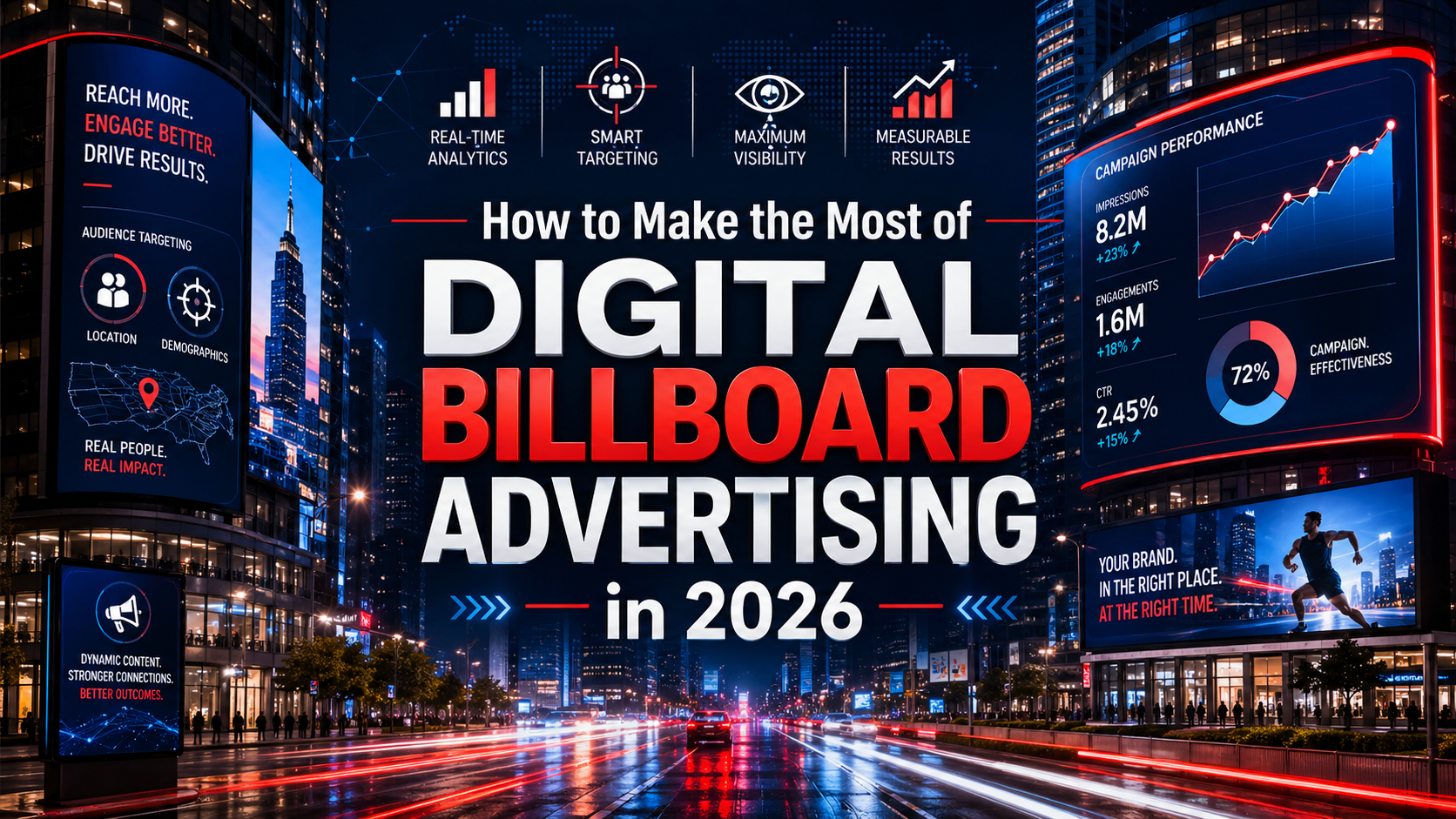
How to Make the Most of Digital Billboard Advertising in 2026
WhatsApp Now : 972-932-1918
Step 1: Define Your Audience Before You Book Locations
Do not start with screen locations. Start with your audience. Who are they? Where do they commute? When are they most receptive? Use footfall and mobility data from your OOH partner to match locations to your audience profile.
Step 2: Use Dynamic Creatives
Static images on digital screens waste the format. Work with your creative team to build multiple versions of your ad that can switch based on time, weather, or day of the week. Even two or three variations perform significantly better than one fixed image.
Step 3: Integrate With Your Digital Campaigns
Align your digital billboard messaging with your social media, search, and display campaigns. Consistent messaging across touchpoints reinforces recall. Use the same visual language, colour palette, and key message across all channels.
Step 4: Add a Mobile Response Mechanism
Include a QR code or a short, memorable URL on every digital billboard. This turns a passive impression into an active interaction — and gives you data to work with.
Step 5: Measure and Optimize
Set clear KPIs before launch — impressions, QR scans, branded search uplift, or foot traffic to your store. Review mid-campaign and optimize placements, creative, or time slots based on what the data shows.
WhatsApp Now : 972-932-1918
Best Practices for Digital Billboard Advertising in 2026
- Less is more with copy. Viewers have 3–5 seconds. One message, one visual, one call to action.
- Design for distance. Bold fonts, high contrast, large visuals. A clever design that is hard to read from 30 metres is a wasted ad.
- Use motion purposefully. Animated content grabs attention, but overly complex animations confuse viewers. Keep motion simple and purposeful.
- Time your ads. Breakfast brands work better in morning slots. Entertainment brands perform well on Friday evenings. Match your message to the moment.
- Think hyperlocal. A digital billboard near your store promoting a same-day offer performs very differently from a general awareness campaign. Use the proximity to your advantage.
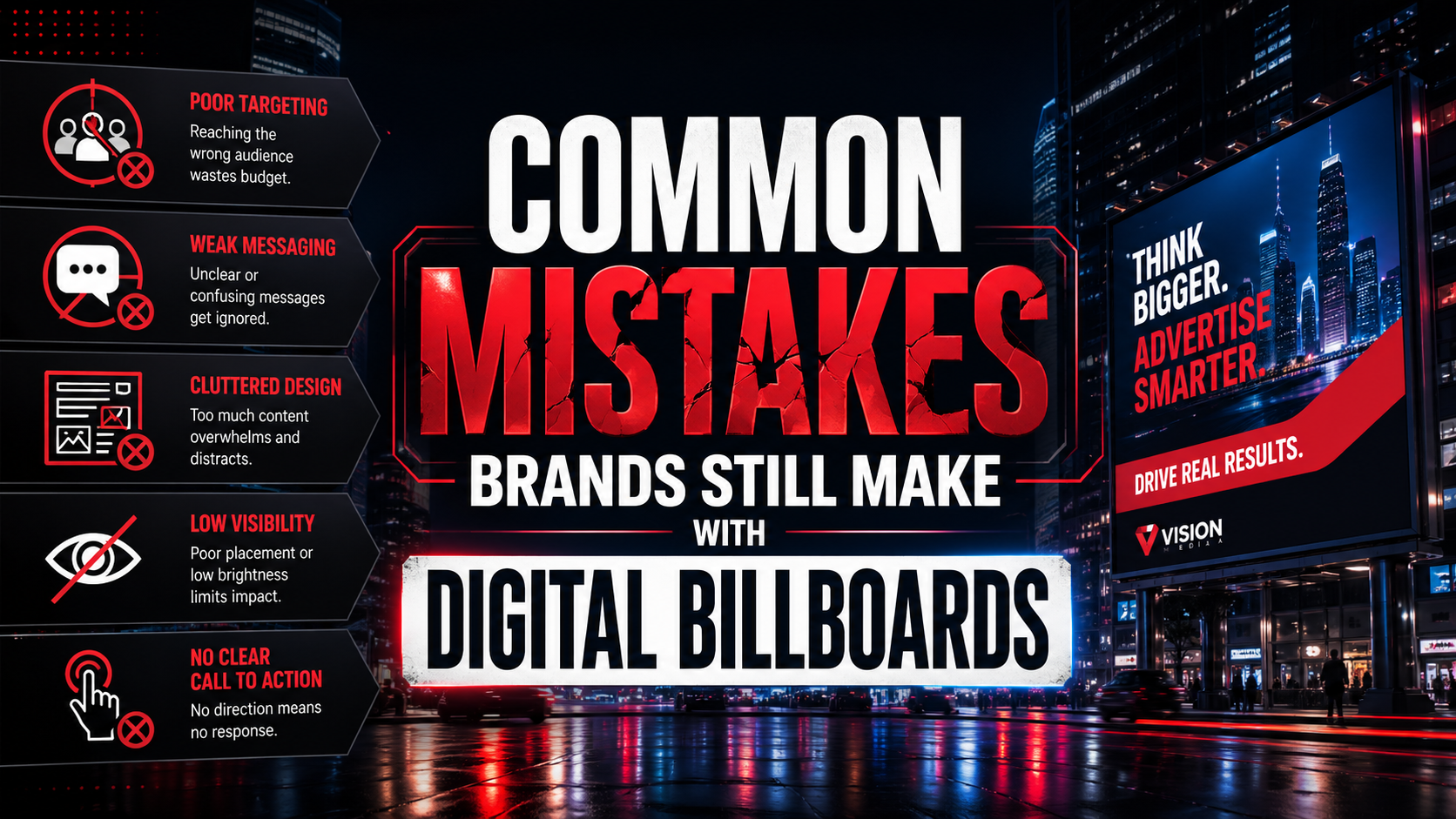
Common Mistakes Brands Still Make With Digital Billboards
- Repurposing social media creatives without adapting them. What works as an Instagram Story will not work on a 40-foot billboard. The format, viewing distance, and context are completely different. Always brief your creative team specifically for OOH.
- Ignoring time-of-day relevance. Booking a 24-hour slot and running the same message all day misses the point of digital. Use dayparting to match your message to the audience at each time of day.
- No measurement plan. If you cannot measure it, you cannot improve it. Build tracking into every campaign — QR codes, unique URLs, or post-campaign brand lift surveys.
- Focusing only on prime locations. The most expensive, highest-traffic screens are not always the best fit. A screen in a more targeted location — near your store, inside the right residential complex, or at a relevant transit hub — often delivers a better return.
- Running campaigns that are too short. A one-week digital billboard campaign rarely moves the needle on brand recall. Outdoor advertising builds through repetition. Plan for a minimum of four weeks for meaningful results.
WhatsApp Now : 972-932-1918
Frequently Asked Questions (FAQs)
1. What is digital billboard advertising and how is it different from traditional OOH?
Digital billboard advertising uses LED or LCD screens to display dynamic, rotating, or video-based ads in public spaces. Unlike traditional static billboards that show one fixed image, digital billboards can display multiple ads, switch creatives based on time or context, and be updated instantly — making them far more flexible and measurable.
2. How much does digital billboard advertising cost in India in 2026?
Costs vary widely based on location, city, screen size, and duration. In metro cities, prime digital billboard slots can range from ₹50,000 to ₹5,00,000+ per month. Programmatic DOOH allows more flexible, impression-based buying that can suit smaller budgets. At Liftup Marketing, we help brands find the right placements for their budget and goals.
3. Can small businesses use digital billboard advertising effectively?
Absolutely. With programmatic DOOH and hyperlocal placements, small businesses can target specific neighbourhoods, localities, or building types without committing to city-wide campaigns. A local restaurant, gym, or clinic can run a targeted digital billboard campaign near their location at a very reasonable cost.
4. How do I measure the ROI of a digital billboard campaign?
Use QR codes, unique landing page URLs, or dedicated promo codes to track direct responses. Beyond that, monitor branded search volume, website traffic from the target city or locality, and foot traffic during the campaign period. Advanced DOOH platforms also provide post-exposure attribution data linking screen exposure to online behaviour.
5. What are the best formats for digital billboard creative in 2026?
Short animated loops (3–5 seconds), bold static images with a single key message, and contextually triggered dynamic creatives are all performing well in 2026. Video content works well on screens with higher dwell times (mall atriums, transit hubs). For roadside billboards, static or simple motion with high-contrast visuals still wins.
WhatsApp Now : 972-932-1918
Conclusion
Digital billboard advertising in 2026 is not the same game it was even two years ago. Programmatic buying, AI-driven creatives, mobile integration, and real-time measurement have transformed what was once a blunt awareness tool into a precise, accountable, and powerful marketing channel.
The brands winning in this space are not necessarily spending more. They are thinking smarter — using data to choose better locations, dynamic creatives to say the right thing at the right moment, and proper measurement to prove what is working.
The screens are brighter, the data is richer, and the opportunity is bigger than ever. The only question is whether your brand is ready to take advantage of it.
WhatsApp Now : 972-932-1918
Partner With Liftup Marketing for Your Next DOOH Campaign
At Liftup Marketing, we help brands cut through the noise with smart, data-driven Out-of-Home advertising strategies — from digital billboards to lift advertising and everything in between.
Whether you are planning your first DOOH campaign or looking to scale an existing OOH strategy, our team has the locations, the tools, and the expertise to deliver real results.
Get in touch with Liftup Marketing today and let’s build a campaign that gets noticed.
Your brand deserves more than a static impression. Let’s make it dynamic.